


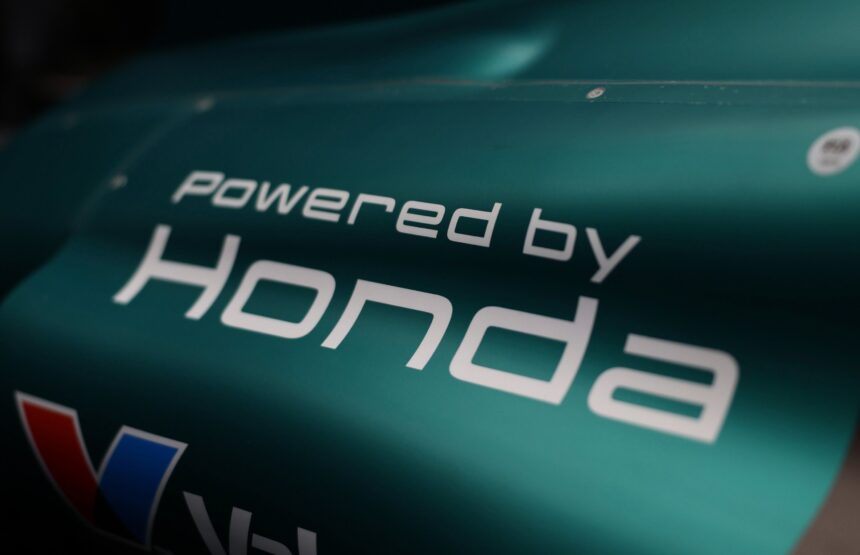
The Japanese carmaker Honda has made changes to its Formula 1 engine program after its poor showing at the start of its latest stint in the series this year.
Honda, which clinched four World Championships with Red Bull Racing and Max Verstappen from 2021-2024, partnered up with Aston Martin as their engine supplier for 2026.
However, the two are currently tied for 10th of 11 in the constructors’ standings, with their best finish being a ninth-place finish by Fernando Alonso at the Dutch Grand Prix.
On Monday, Honda made an announcement about its new leader in its engine development program, per BBC Sport.
Former deputy leader Yoichiro Fukao will be taking on the role of Large Project Leader of the F1 project.
He succeeds Tetsushi Kakuda, who has been running the power unit development program this season.
A statement said: “This organizational change is a planned transition designed to ensure the reliable transfer of technical expertise to the next generation of engineers.
“Following the introduction of the new regulations in 2026, and with further regulatory changes expected from 2027 onwards, Honda aims to establish a robust development framework and deliver a highly competitive PU by transitioning to the new structure at an early stage.”
The first engine upgrade for the campaign by Honda happened at the Dutch Grand Prix.
However, despite head of trackside general manager Shintaro Orihara claiming that Honda had “observed (a) step forward in terms of performance on our metrics”, the step is believed to have been minimal, with the result falling short of expectations from Aston Martin.
It is also estimated that the performance of the Honda engine alone is costing at least a second per lap due to the losses from the performance of the internal combustion engine and the electrical systems.
Engines for F1 cars in 2026 have an almost equal contribution from the internal combustion and the electrical parts, and efficiency in recovering the energy is important when the battery is almost totally charged and discharged multiple times a lap.
Alonso finished 2.2 seconds behind the fastest lap of the session during the first qualifying at the Spanish Grand Prix last weekend.