


Aaron Rodgers arrived in Pittsburgh with one clear objective: give the Steelers the championship experience and quarterback quality they had been searching for since Ben Roethlisberger’s retirement.
Two seasons later, that experiment has come to an abrupt end.
The Pittsburgh Steelers are waiving Rodgers, bringing an end to a partnership that failed to deliver the one thing the franchise wanted most: a playoff victory.
The Steelers franchise have spent years searching for stability at quarterback, and Rodgers was supposed to represent an opportunity to bridge the gap between its successful past and an uncertain future.
Instead, his time in Pittsburgh will be remembered as a mixture of encouraging moments, unfinished business and a disappointing conclusion.
But how should Steelers fans remember the four-time NFL MVP’s time in black and gold?
A reunion that promised a championship push
When Rodgers signed with Pittsburgh in 2025, the move immediately attracted attention across the NFL.
The veteran quarterback was entering the latter stages of his career, but his arrival brought something the Steelers desperately needed: proven experience at the most important position in football.
There was also the emotional element of reuniting with Mike McCarthy, the coach with whom he had won Super Bowl XLV in Green Bay.
The Steelers were hoping that the combination could recreate some of the success they enjoyed together with the Packers.
Rodgers had spent 18 seasons in Green Bay before moving to the New York Jets, where his time was disrupted by an Achilles injury suffered just four plays into his debut in 2023.
Pittsburgh offered him an opportunity to revive his career and potentially finish it with another championship.
His first season provided reasons for optimism.
The division title was a promising start
Rodgers’ debut season in Pittsburgh was arguably the most encouraging part of his Steelers career.
He started 16 games, completing 327 of 498 passes for 3,322 yards, 24 touchdowns and seven interceptions.
Pittsburgh finished 10-6 and captured the AFC North title. However, the season ended in familiar disappointment.
The Steelers were eliminated by the Houston Texans in the Wild Card round, suffering a 30-6 defeat that exposed the gap between being competitive in the regular season and challenging the NFL’s best teams.
It was a disappointing ending to an otherwise encouraging first campaign.
The second season brought a different story
The expectations were understandably high when Rodgers returned for the 2026 campaign.
With another offseason to work within McCarthy’s system, the Steelers hoped their established partnership would produce an even stronger challenge for the AFC.
However, the second season never quite developed as planned.
Through 10 starts, Rodgers recorded 2,241 passing yards, 16 touchdowns and six interceptions, completing approximately 60.9% of his passes.
Pittsburgh went 6-4 in those games, but consecutive defeats and an increasingly inconsistent offensive performance raised questions about the team’s direction.
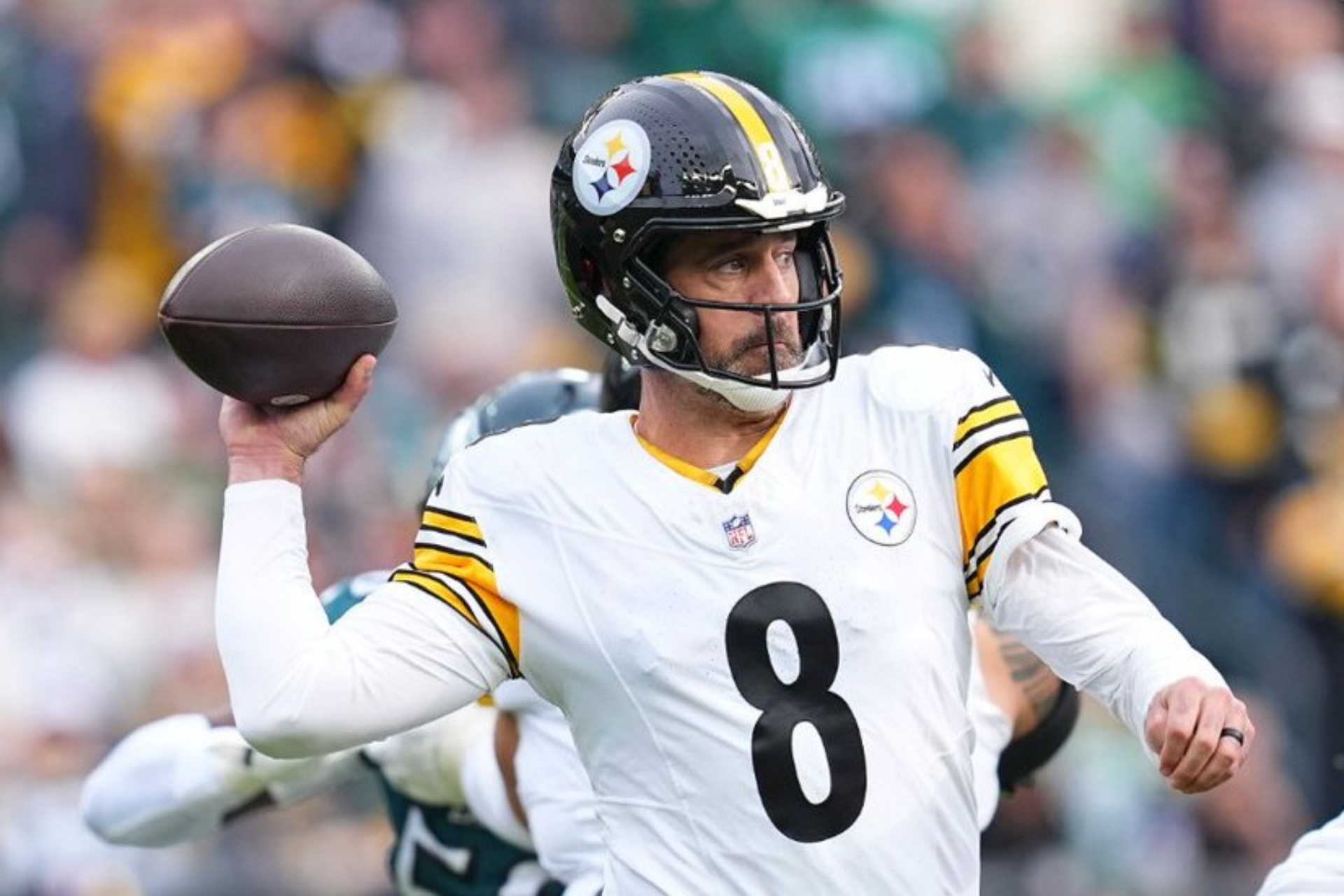
His struggles were particularly evident in the 19-16 loss to the Philadelphia Eagles.
Rodgers completed 30 of 44 attempts for 227 yards and one touchdown, but was sacked five times as Pittsburgh suffered another frustrating defeat.
The Steelers then decided to bench him, naming Mason Rudolph their starter for the Week 12 matchup against the Denver Broncos.
An ugly ending to the McCarthy reunion
The decision to bench Rodgers was followed by a remarkable appearance on The Pat McAfee Show.
The quarterback revealed that he had learned about the decision from teammate Pat Freiermuth rather than directly from McCarthy.
He also made several allegations about his coach’s conduct during team meetings and questioned the team’s offensive approach.
Rodgers acknowledged that he had effectively given McCarthy an ultimatum: change the play-calling arrangement or release him.
The Steelers chose the latter, with the franchise moving to waive the veteran quarterback.
It was an unfortunate conclusion to a reunion that had initially been presented as one of the more intriguing stories of the NFL offseason.
The two men had previously shared a Super Bowl triumph in Green Bay. Their reunion in Pittsburgh was supposed to bring that winning relationship back to life.
Instead, it ended with public criticism, a benching and an abrupt departure.
What will Rodgers’ legacy in Pittsburgh be?
Assessing Rodgers’ Steelers legacy requires separating his individual contribution from the team’s ultimate ambitions.
He was not a complete failure in Pittsburgh.
His first season delivered a division championship, respectable passing production and the experience of a quarterback who had spent years competing at the highest level.
He also helped Pittsburgh maintain a competitive position in the AFC during a period of transition following Mike Tomlin’s departure.
However, the inability to secure a playoff victory remains the biggest disappointment.
The Steelers brought Rodgers in because they believed his experience and championship pedigree could help them take the next step.
While he delivered a winning regular-season record across his two campaigns, the postseason breakthrough never arrived.
His second-season decline and the circumstances surrounding his departure will also complicate how supporters remember his time with the franchise.
The final chapter of a legendary career?
The quarterback had already indicated that the 2026 season would be his last in the NFL.
At 42, with four MVP awards, a Super Bowl championship and a place among the league’s most accomplished passers, Rodgers has little left to prove when it comes to his individual standing in football history.
His Pittsburgh chapter may not have delivered the ending he wanted, but it should not define his entire career.
Rodgers leaves behind a remarkable legacy built in Green Bay, where he established himself as one of the most talented quarterbacks of his generation.
The search for a long-term answer at quarterback continues, while Rodgers moves closer to an uncertain final goodbye to the game.